
Art on Vancouver Island: Contemporary Canadian Art from the West Coast
There is a rich and distinctive culture of art on Vancouver Island, shaped by the land, the ocean, the many communities who call this island home, and the deep cultural presence of First Nations whose territories encompass the island. From Indigenous art and cultural traditions to contemporary painting, sculpture, photography and installation, Vancouver Island has long been a place where artists respond to the landscape and to the particular character of life on the West Coast.
For me, Vancouver Island is home. It is where I was born, where I grew up, and where my understanding of place began.
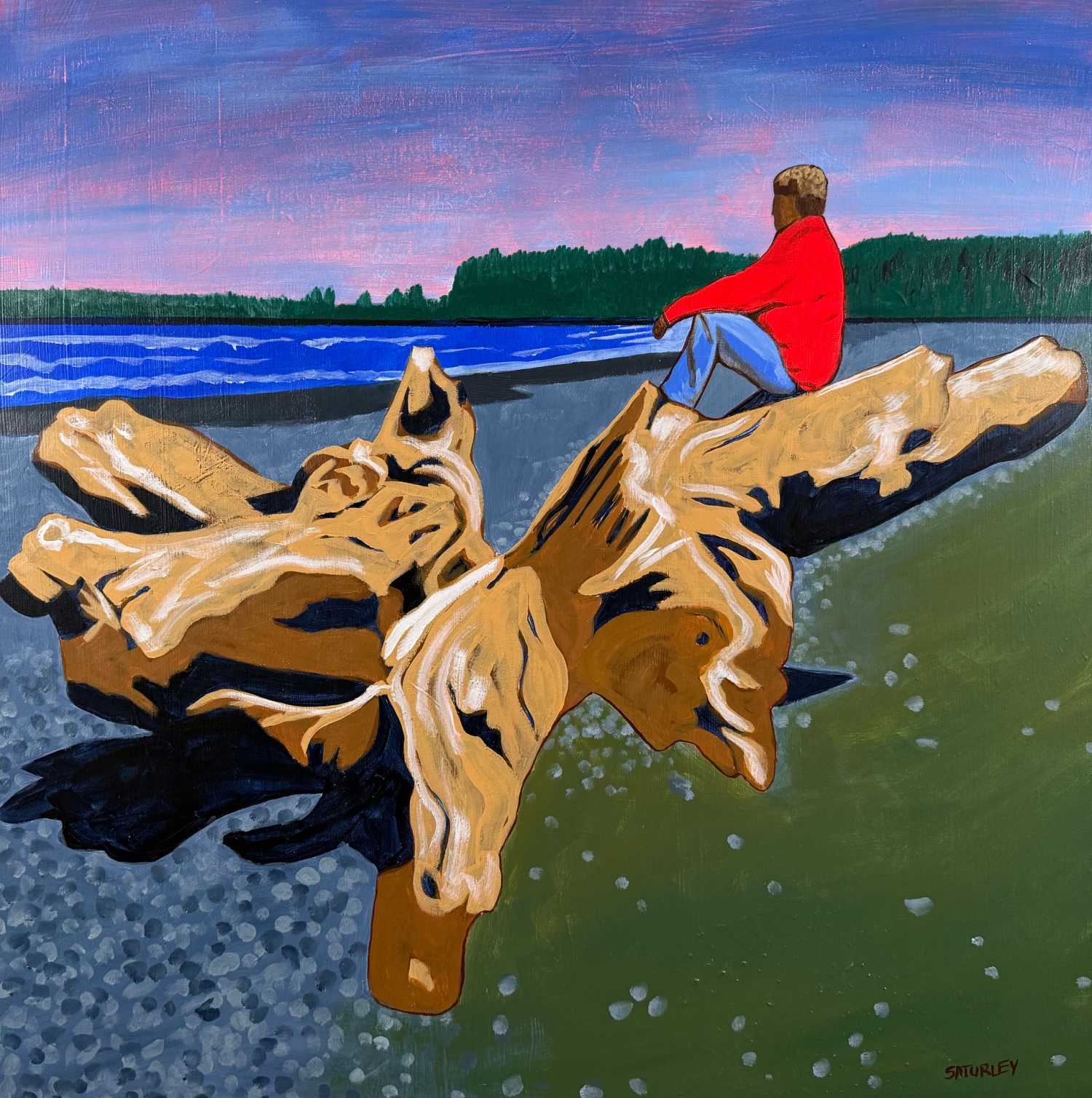
Rooting for You, c. 2026 Acrylic On Canvas 30 x 30 x 1.5 in Brandy Saturley
A Different Perspective on Canadian Art
When we think about Canadian art, the landscape is often the starting point. The paintings of the Group of Seven established an enduring visual language of mountains, forests, lakes and wilderness, while artists such as Lawren Harris, Emily Carr and Alex Colville expanded the ways Canadians could see and understand their surroundings.
But Canadian art has never been only about landscape. It is also about people, popular culture, identity, history, memory and the everyday experiences that shape how we understand a place. Today, contemporary Canadian artists are continually expanding that conversation, bringing together traditional ideas of Canadian identity with new perspectives and experiences.
Vancouver Island offers a particularly fascinating place from which to consider that idea. Surrounded by the Pacific Ocean and separated from mainland British Columbia, the island has developed a distinctive visual and cultural identity. The rainforest, coastline, mountains, wildlife, weather and communities all contribute to an artistic landscape that feels distinctly West Coast.
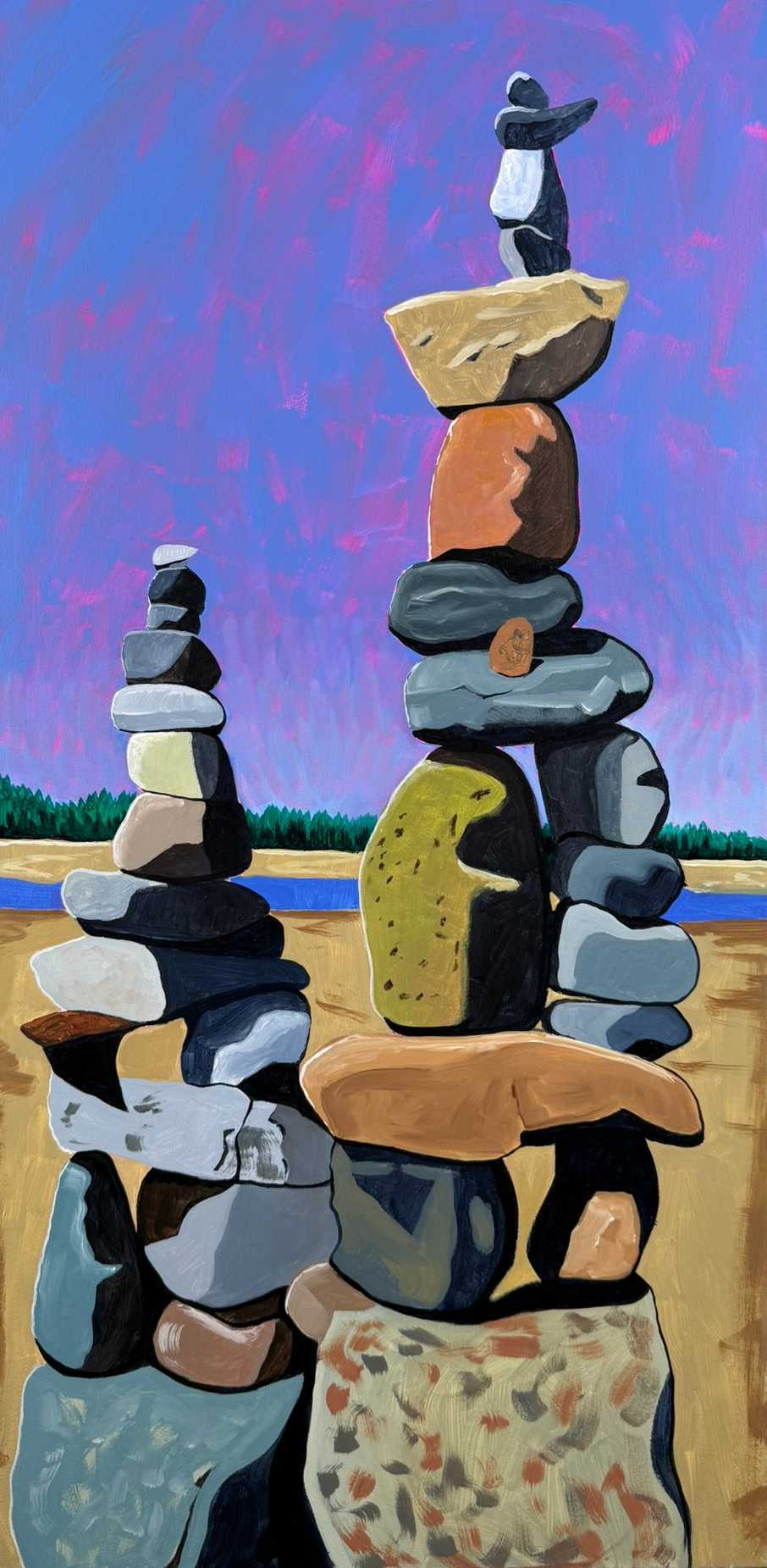
Cairns of Love, c. 2026 Acrylic On Canvas 36 x 18 x 1.5 in Brandy Saturley
Growing Up on Vancouver Island
I was born in Victoria, British Columbia, and grew up in Sooke, on the western edge of the Greater Victoria region, where the rainforest meets the sea. Growing up in Sooke, I was surrounded by the landscape and culture of Vancouver Island from an early age. The presence of the T’Sou-ke Nation and other First Nations communities was part of the cultural fabric of the place I knew as home. I also grew up visiting the Royal BC Museum in Victoria, developing an early curiosity about the history, cultures and industries that have shaped British Columbia.
The island’s visual language became part of my own visual vocabulary long before I understood it as an artist. There were Cowichan sweaters, ocean beaches, cedar forests, mountains, fishing boats, wildlife and the ever-changing Pacific weather. There was the particular light of the West Coast and the feeling of living somewhere simultaneously connected to and separated from the rest of Canada.
Those experiences continue to inform my work.
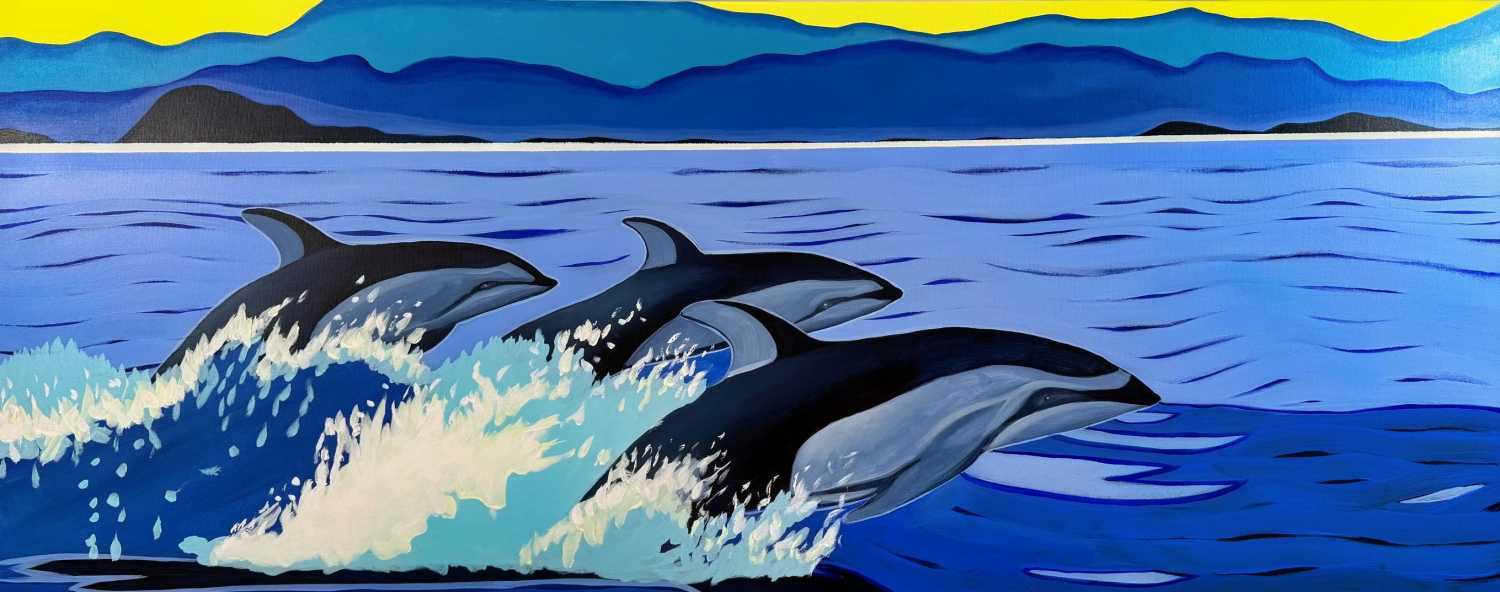
Ultramarine Jazz, c. 2026 Acrylic On Canvas 24 x 60 x 1.5 in Brandy Saturley
From Painting Canada to Painting Home
For much of my career, I have travelled across Canada, creating paintings inspired by the country’s people, places, symbols and popular culture. My ongoing exploration of Canadian identity has taken me from coast to coast to coast, from Newfoundland and the Maritimes to the Prairies, the Rocky Mountains, the North and the West Coast.
My series of paintings has explored everything from hockey and the Canadian flag to wildlife, landscapes, iconic places and the people who make up this country. Over time, however, something changed. The further I travelled to understand Canada, the more interested I became in understanding the place I had started from. Vancouver Island became more than the place I happened to live. It became a subject.
In recent work, I have been looking closely at the landscape of mid-Vancouver Island and the West Coast: the Salish Sea, beaches, forests, wildlife, mountains and the particular rhythms of coastal life. My West Coast Stories and Salish Sea paintings reflect this renewed attention to home. After years of travelling extensively across Canada, I am now spending more time exploring the island I call home. There is still plenty to discover.
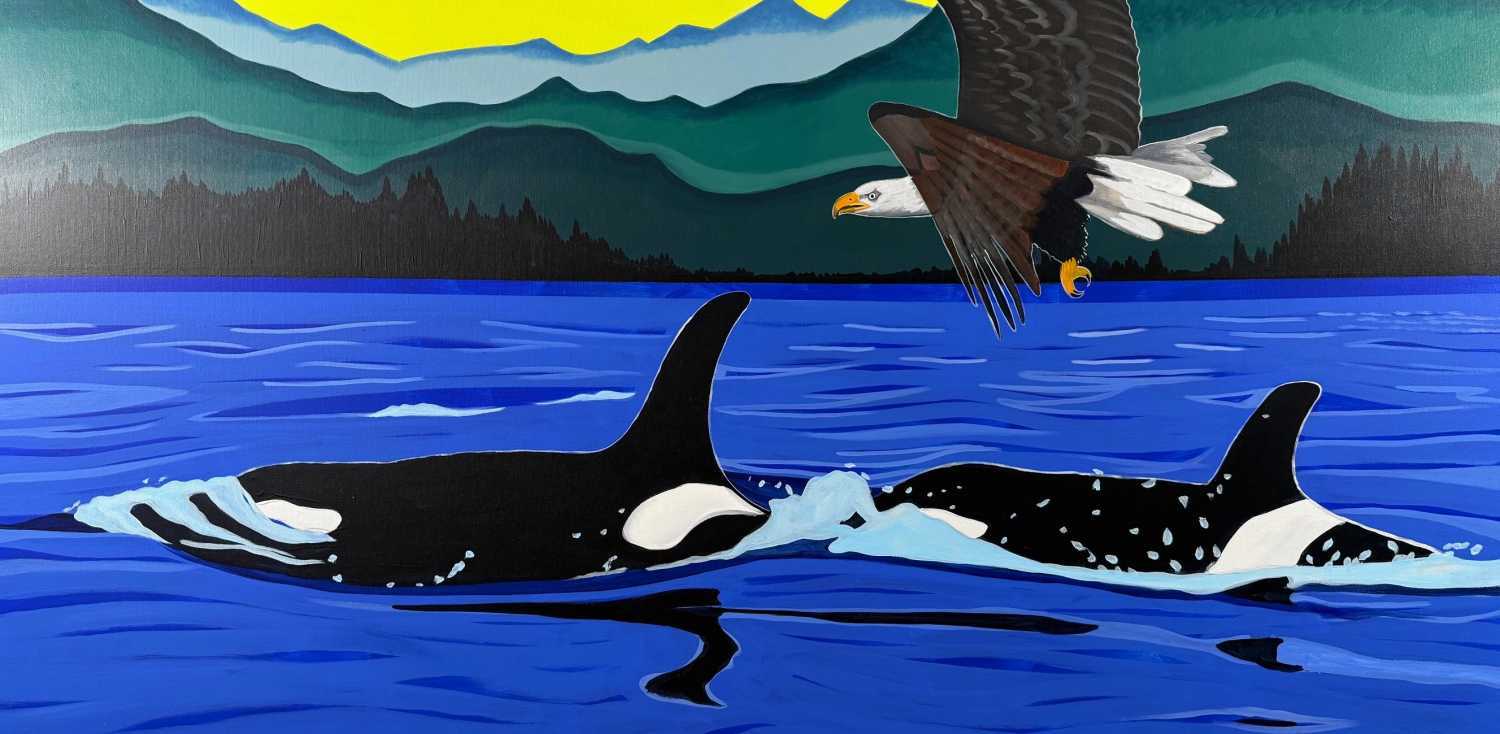
Guardians of The Salish Sea, c. 2026 Acrylic On Canvas 30 x 60 x 1.5 in Brandy Saturley
Contemporary Art on Vancouver Island
The art scene on Vancouver Island extends well beyond Victoria. Artists work throughout the island, from studios and galleries in Victoria and Saanich to communities such as Sooke, Cowichan Valley, Nanaimo, Parksville, Qualicum Beach, Comox Valley, Campbell River, Ucluelet and Tofino.
There are public galleries, commercial galleries, artist-run spaces, cultural organizations, museums, art fairs and independent studios throughout the region. Many artists work directly from their homes and studios, developing practices that respond to the island’s unique environment and communities.
Victoria remains an important cultural centre, with a long history of artists who have found inspiration here. Most famously, Emily Carr made Vancouver Island and its landscapes central to her artistic practice. Her paintings and writing helped establish a powerful visual connection between British Columbia’s landscape and Canadian modernism.
But the story of art on Vancouver Island did not end with Carr.
Contemporary Vancouver Island artists continue to reinterpret the landscape and the experience of living on the West Coast. Some work directly with the natural environment, while others explore identity, politics, culture, technology, community and contemporary life.
That breadth is what makes the island’s art scene so interesting.
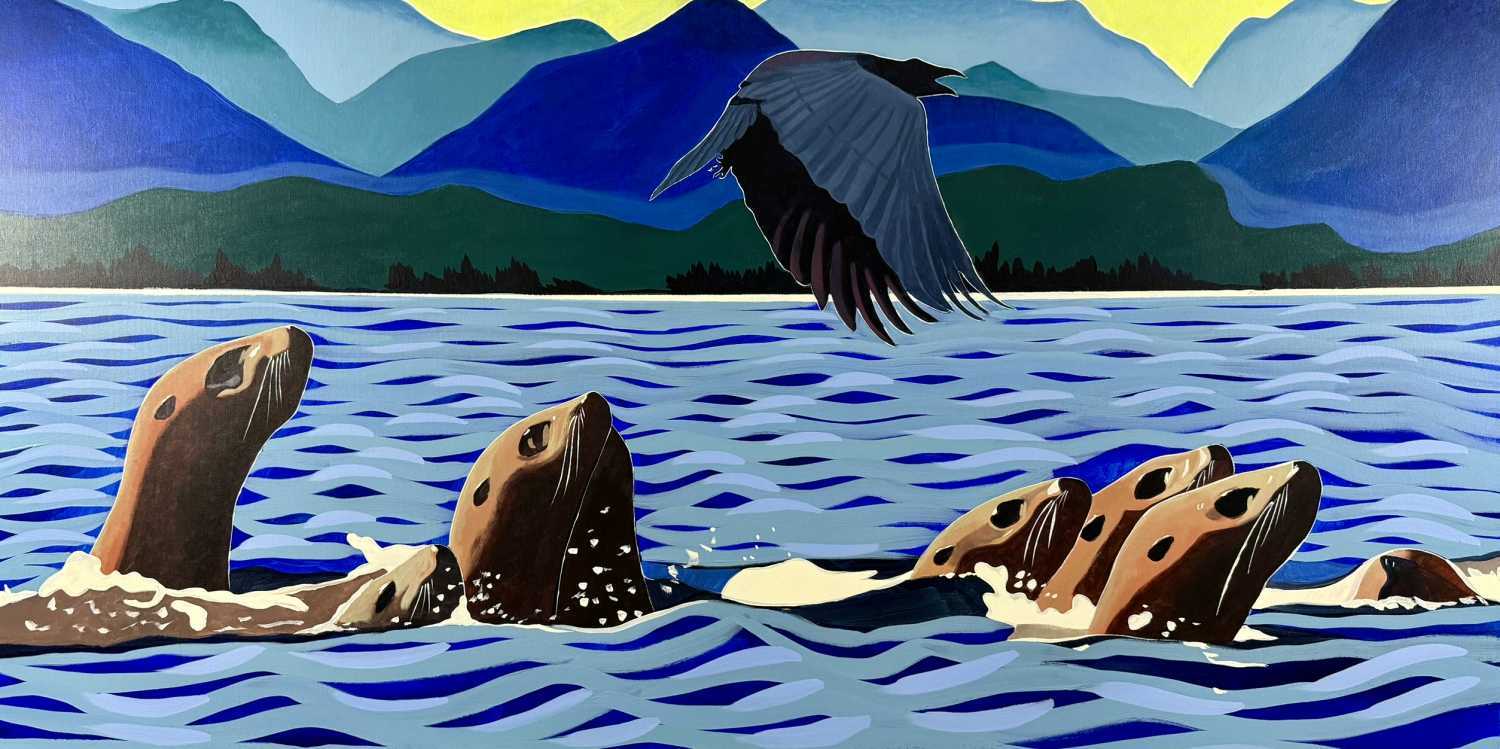
Sealions Song, c. 2026 Acrylic On Canvas 30 x 60 x 1.5 in Brandy Saturley
The Island as Inspiration
Living on an island creates a particular relationship with place. The ocean is never far away. Mountains appear on the horizon. Forests surround communities. Weather changes the colour and character of the landscape from one day to the next. Wildlife is part of everyday life. A walk along a beach, a drive through a forest or a view across the Salish Sea can become the beginning of a painting.
For me, these experiences have become increasingly important. My paintings are not intended to be literal representations of Vancouver Island. Instead, I use colour, gesture, abstraction and recognizable imagery to explore how a place feels and what it means to belong to it. This is part of my larger practice of painting Canada.
I am interested in the symbols and images that collectively create our idea of Canadian identity, but I am equally interested in the quieter experiences that exist underneath those symbols: a particular landscape, a memory, a person, an animal, a road, a beach or a moment of looking out across the water.
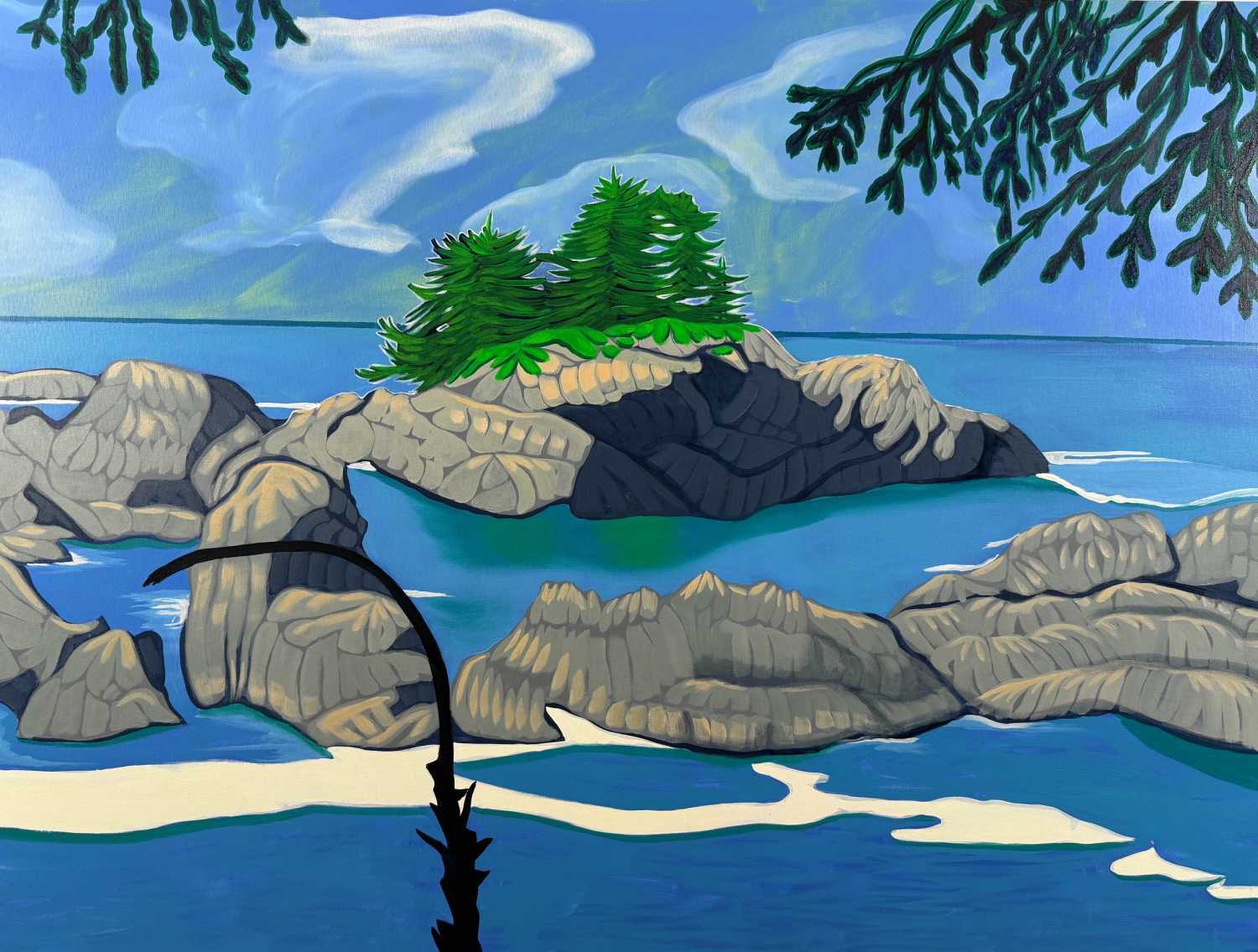
Ucluelet, c. 2026 Acrylic On Canvas 36 x 48 x 1.5 in Brandy Saturley
Art from Vancouver Island
Vancouver Island occupies a fascinating position within Canadian art. It is geographically distant from Canada’s major urban art centres, yet it has developed a strong and increasingly visible contemporary art community of its own. The island’s isolation is part of its character, but it is no longer the barrier it once was. Artists on Vancouver Island can now connect with collectors, galleries and audiences across Canada and around the world while continuing to make work from their island studios.
That combination of place and connection interests me. My own paintings are rooted in Vancouver Island but are part of a much larger conversation about Canadian art. I continue to paint the country as I experience it, moving between the iconic and the everyday, the familiar and the unexpected.
After two decades of painting Canada, I find myself increasingly drawn back to the West Coast. Perhaps that is the nature of home. You can spend years travelling across a country looking for what makes it unique, only to return to the place where your own story began and discover that there was still an entire landscape waiting to be painted.
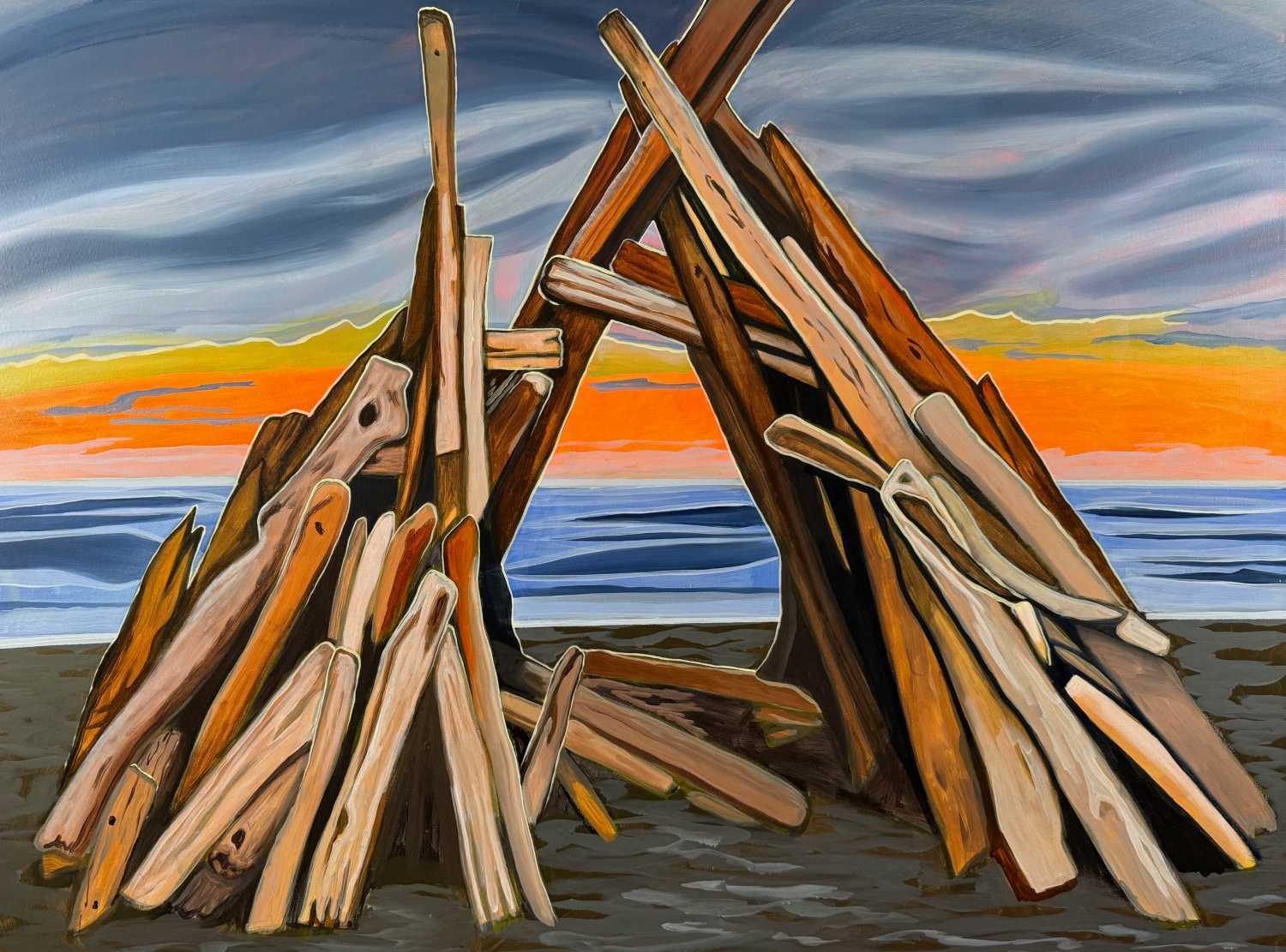
Beach House, c. 2025 Acrylic On Canvas 36 x 48 x 1.5 in Brandy Saturley
Explore My Vancouver Island Paintings
My recent paintings explore the landscapes, wildlife and coastal experiences of Vancouver Island and the West Coast, alongside my continuing body of work about Canadian identity and iconography.
Explore my contemporary Canadian paintings and Vancouver Island artwork →